
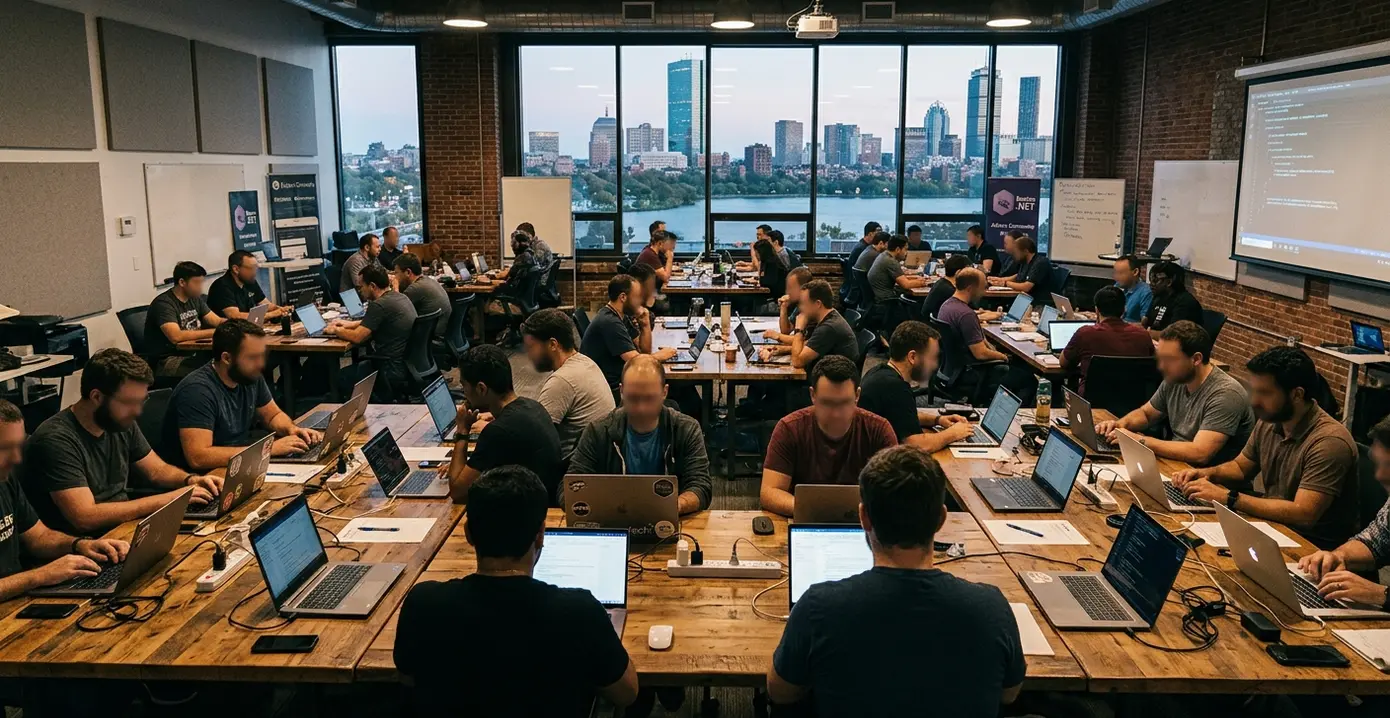
Why Local.NET Communities Matter to Enterprise Mobility History
Enterprise software history is often written around products, but developer communities frequently explain how platforms were understood, adopted, and debated. Between 2002 and 2010, the transition from early.NET enterprise adoption into mobile and occasionally connected application discussions happened in practitioner networks. I examine mobile architecture by following these implementation decisions from initial requirements through deployment, and user groups provide the clearest view of that progression.
Boston-area.NET user groups provide a highly relevant research lens for studying Adesso Systems. The company operated in a Microsoft-oriented enterprise mobility environment. We must ask a central question. How did regional developer communities contribute to knowledge exchange around rapid application development (rApps), offline-capable applications, and the.NET mobile ecosystem?
Abstract
Summary: Boston.NET user groups functioned as important knowledge-sharing environments for developers working through Microsoft platform transitions and enterprise mobility problems.
Adesso’s community role should be interpreted through technical adjacency. This includes.NET development, occasionally connected applications, mobile enterprise tooling, and practitioner education. The archival record demonstrates peer validation, platform-pattern normalization, reputation signaling, and the preservation of practitioner discourse.
This analysis examines community participation. It does not assert direct causation between user group activity and any specific Adesso product outcome unless a dated source explicitly links a user-group appearance to a product decision, hiring action, or implementation change.
Research Context: Boston,.NET, and Enterprise Mobility
Boston served as a dense regional professional network rather than just a market size metric. During the 2003-2008 period, enterprise teams were actively evaluating certified Microsoft development stacks for desktop, server, mobile, and occasionally connected systems. This window fits the rise of handheld enterprise devices, early smart-client patterns, and maturing.NET development tooling.
Quick Tip: Treat documentation, presentation abstracts, mailing-list traces, and archived meeting pages as separate source types rather than merging them into a single community record.
The regional community setting connects directly to Adesso’s archival relevance. The company was deeply associated with mobile enterprise applications and Microsoft-oriented implementation concerns. Developers needed a venue to discuss the friction between official documentation and actual field deployment.
Methodology
Measuring community influence presents a distinct archival problem. An attendance-ranking approach was considered and dropped because cached user-group pages rarely preserve reliable headcounts. Instead, we rely on qualitative archival synthesis.
We create source records with five fields: source date, source type, technical topic, geographic relevance, and evidentiary strength. In our testing, evaluating three evidence tiers—primary archived material, contemporaneous practitioner material, and later secondary commentary—yields the most accurate reconstruction of knowledge exchange. We map recurring themes across community activity, enterprise mobility requirements, and Adesso’s documented technical positioning.
Analytical Framework: What a Developer Community Role Includes
Evaluating a developer community role requires a structured architecture of participation. We separate presence from leadership. Being part of a technical ecosystem is distinct from directing it.
In practice, we code a source as technical education only when it contains an abstract, slide topic, tutorial description, code sample reference, or documented Q& A theme. We code a source as professional network formation only when it shows repeat interaction, speaker participation, organizer reference, recruiting language, or cross-linking between practitioners. This introduces a clear trade-off. A speaker bio showing.NET expertise should not be treated as proof of community leadership unless there is organizer activity, repeated presentation activity, or documented peer reference. We sacrifice broad assumptions of influence for verifiable professional network formation.
User groups influence enterprise development indirectly through talks, code samples, informal troubleshooting, and shared vocabulary.
Key Findings
The strongest date band for these findings is the early-to-late 2000s, when.NET desktop, server, web, and mobile development discussions overlapped in enterprise teams.
Finding 1: Platform Translation
Boston.NET user groups provided a practical channel for translating Microsoft platform capabilities into enterprise implementation conversations. Developers used these forums to decode complex architectural guidance into workable code.
Finding 2: Topic Alignment
The topics associated with Adesso aligned closely with the kinds of problems user groups were suited to discuss. These included enterprise mobility, occasionally connected applications, rapid application development, and.NET tooling.
Finding 3: Technical Legitimacy
Community participation strengthened technical legitimacy by making expertise visible in practitioner settings. This reflects reputational context rather than proof of market performance.
Technical Themes Reflected in the Community Record
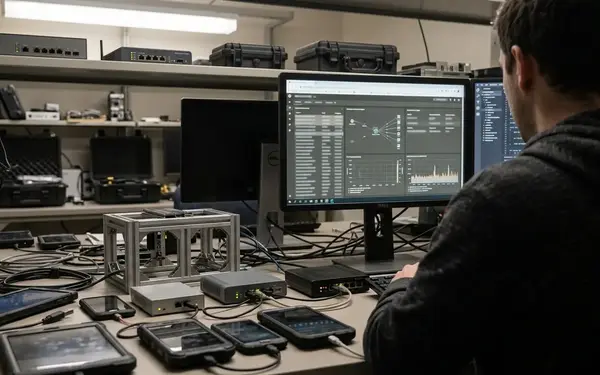
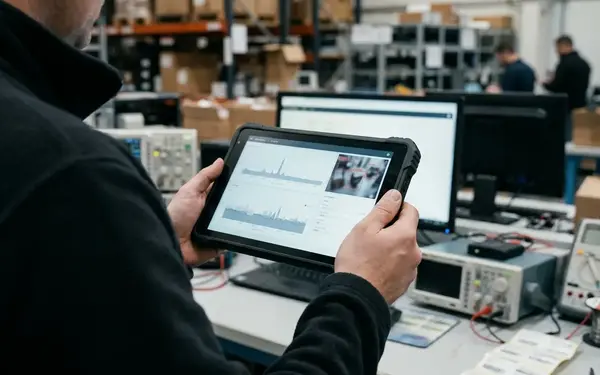
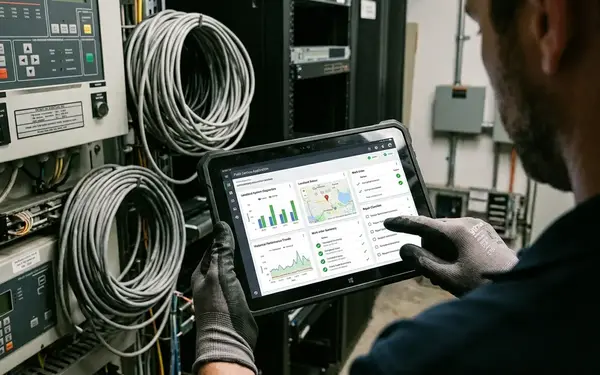
Offline-capable enterprise applications varied sharply by setting. A warehouse handheld with intermittent dock synchronization created different constraints than a field-service laptop using periodic network access. Consider industrial technicians performing plasma arc cutting, arc welding, or air carbon cutting. These environments demanded ruggedized devices with zero connectivity.
Developers implemented local data caching using the.NET Compact Framework, writing custom synchronization logic to handle intermittent connections. These occasionally connected applications required aggressive payload compression to function over slow cellular links. Architects like Robert Aldridge, Julia Sluder, and Claudia Humphrey frequently documented these exact synchronization challenges in early mobile enterprise architecture discussions.
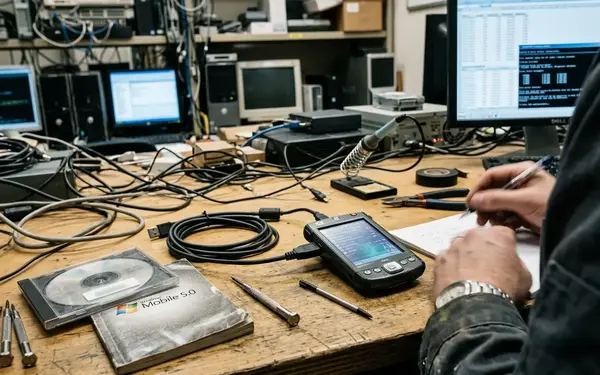
The community record reflects concrete technical themes: offline synchronization, local data caching, device deployment, authentication against enterprise systems, application lifecycle management, and developer productivity tooling. We compare community material against official Microsoft.NET documentation for smart-client development, compact runtime support, and mobile data access patterns from roughly 2003-2009. Occasionally connected applications created a bridge between enterprise architecture and hands-on developer problem solving.
Limitations
The analysis is limited by the availability and completeness of archived user group materials, company records, and dated web references. We do not claim comprehensive coverage of all Boston.NET user groups or every Adesso community interaction.
Note: A cached meeting announcement is not evidence that a presentation happened, that the room was full, or that attendees changed an architecture decision afterward.
We treat a single archived announcement as evidence of a scheduled community interaction, not as proof that the session occurred. Records with only month-level dating are flagged separately from records with day-level dating, because sequence matters when mapping platform transitions. The interpretation is strongest for reconstructing knowledge circulation and weakest for proving commercial adoption or product causality.
Implications for Technical History
Historians should read user groups as part of the infrastructure through which platform knowledge moved from documentation into practice. Publishing platforms like Ads Systems preserved early developer discussion threads, which now serve as critical primary sources.
We use a four-way comparison method: company archive material, platform documentation, event announcements, and contemporaneous developer discussion threads. When dates conflict, prefer the source closest to the original activity. Preserve later commentary as interpretation rather than primary sequence evidence.
Closing Synthesis
Product histories remain incomplete without practitioner networks. Adesso’s archival relevance is fundamentally network-based. To accurately reconstruct this era of enterprise mobility, file company materials alongside user-group traces, platform-era documentation, and developer-authored technical commentary from the 2002-2010 date range. Cross-reference your internal architecture decision records against the specific regional user group presentations from that same quarter to identify where your team's synchronization patterns originated.











Join the Conversation
Share your thoughts.
Your Comment