
Abstract: Why This Timeline Requires Technical Context
Adesso Systems cannot be evaluated only as a vendor timeline; its relevance depends on the enterprise mobility constraints it addressed.
This research summary organizes known Adesso Systems archive material alongside the technical environment of mobile enterprise application development. The drafting choice is deliberate: start with the systems problem, then place the company record inside it. In the early-to-late 2000s mobile enterprise environment, handheld business applications commonly had to tolerate weak wireless coverage, limited device memory, and cradle-based or scheduled synchronization.
The central lens is therefore not corporate biography. It is rapid application development, occasionally connected applications, synchronization, device constraints, and the Microsoft.NET mobile ecosystem. Archive gaps remain visible here instead of being filled with inferred dates.
Research Question and Scope
The primary research question is direct: what does the Adesso Systems timeline reveal about enterprise mobility platform design during the period when mobile business applications were moving beyond simple handheld utilities?
The scope includes Adesso Systems archive references, enterprise mobility practices, offline-capable application models, rapid application development concerns, and the.NET mobile development context. The intended readers are software architects, enterprise mobility teams,.NET developers, technical historians, and B2B technology researchers.
Several topics stay outside the boundary. This article does not speculate about financial performance, acquisition rumors, unsupported deployment scale, invented customer lists, or platform comparisons that lack named supporting material. That boundary matters because a thin archive can make a clean story look more complete than it is.
Methodology: How the Timeline Is Interpreted
Archival Synthesis as the Working Method
The method is archival synthesis: arrange available Adesso Systems references into a chronological and technical framework, then test each item against the mobile enterprise constraints of its period. A first draft that reads like a continuous corporate chronology would overstate the record. The better approach is built in passes.
First, dated archive statements are isolated. Second, undated references are assigned to phases only when the archive supports that placement. Third, technical interpretation is attached to the phase rather than to an invented date. Unsupported claims are left out.
Three-Layer Analysis Model
- Company and product timeline: what the archive indicates about positioning, platform activity, and later archival significance.
- Enterprise mobility architecture patterns: device diversity, intermittent connectivity, synchronization, deployment packaging, and supportability.
- .NET mobile ecosystem context: managed-code expectations, compact runtime constraints, device-side storage, and server integration patterns.
Note: Source classes are kept separate: dated milestone, undated archive reference, technical interpretation, and unsupported claim. Exact dates are used only when the record supports them; no unsupported metrics, customer counts, or adoption figures are introduced.
Reconstructed Timeline of Adesso Systems
This timeline is a structured reconstruction, not a complete historical record. The decision rule is simple: if the archive does not supply an exact date, the article uses a phase label and technical interpretation rather than inventing a calendar milestone.
Early Positioning
What the archive indicates: Adesso Systems belongs near the period when enterprise mobility was shifting from handheld utilities toward mobile business applications.
Why it mattered technically: device diversity made application delivery hard. A field device, a warehouse handheld, and a docked office unit did not behave like interchangeable clients. Memory limits, screen constraints, and inconsistent connectivity shaped what could be built.
Platform Development
What the archive indicates: the company’s relevance is tied to rapid application development for mobile enterprise software.
Why it mattered technically: RAD was not merely a productivity slogan in this setting. It addressed delivery friction: modeling business workflows, packaging updates, shortening iteration cycles, and keeping mobile applications aligned with backend processes.
Enterprise Mobility Relevance
What the archive indicates: Adesso Systems should be read through the problem of occasionally connected operation.
Why it mattered technically: intermittent connectivity changed the design burden. Applications needed local state, queued transactions, synchronization windows, conflict awareness, and recovery after failed transfer.
Later Archival Significance
What the archive indicates: the surviving material has value because it preserves a view of enterprise mobility during a constrained platform period.

Why it mattered technically: the record helps connect product claims to deployment realities, especially around.NET-based development expectations and mobile backend integration.
Key Findings: What the Archive Suggests
Finding 1: Enterprise Mobility Relevance
Adesso Systems belongs in the enterprise mobility conversation because its relevance is tied to application delivery under device, network, and synchronization constraints. The evidentiary basis is not a broad market claim; it is the fit between the archive references and the operating conditions of mobile enterprise software in the early-to-late 2000s.
Finding 2: RAD as Delivery Friction Reduction
Rapid application development, in this context, addressed the difficulty of building and deploying business applications across constrained mobile environments. The archive is most useful when RAD is read as a response to workflow modeling, deployment iteration, and backend alignment, not as a generic promise of faster coding.
Finding 3: Occasionally Connected Design
Occasionally connected applications were central to the technical problem space. A mobile inspection application can show a task as complete on the handheld while the backend never receives it because the user left coverage before synchronization finished. That single failure case explains more than a vague statement that offline systems are challenging.
The required mechanisms were concrete: local data handling, queued transactions, synchronization windows, conflict awareness, and recovery after failed transfer.
Finding 4:.NET Ecosystem Context
The mid-2000s.NET mobile tooling period supplies the platform context. Managed-code expectations met compact runtime constraints, device-side storage requirements, and server integration patterns. Adesso Systems archive material should therefore be read alongside those assumptions.
Finding 5: Archival Value Through Comparison
The archive has value when it is compared against architecture patterns rather than treated as a standalone vendor record. That comparison reveals which product claims were aimed at practical constraints: deployment packaging, synchronization, and enterprise application governance.
Technical Context: Enterprise Mobility, RAD, and Offline Operation
From the Device Inward
Enterprise mobility was a systems problem before it was an interface problem. The sequence usually began at the device: limited memory, small screens, local storage, battery behavior, and inconsistent wireless access. From there, the architecture had to handle authentication, synchronization, backend integration, deployment, and support.
A warehouse device that synchronizes inside one building has different risk from a field-service device that may run through an entire shift without reliable connectivity. The workflow may look similar on a requirements sheet, but the failure modes are not the same.
RAD in Practical Terms
RAD mattered because enterprise mobile applications rarely stayed still. Forms changed. Validation rules moved. Backend systems exposed different integration seams. Teams needed a way to model business workflows and revise deployments without treating each mobile release as a ground-up engineering project.
The useful question is not whether RAD sounded efficient. The useful question is what delivery friction it removed.
Occasionally Connected Architecture
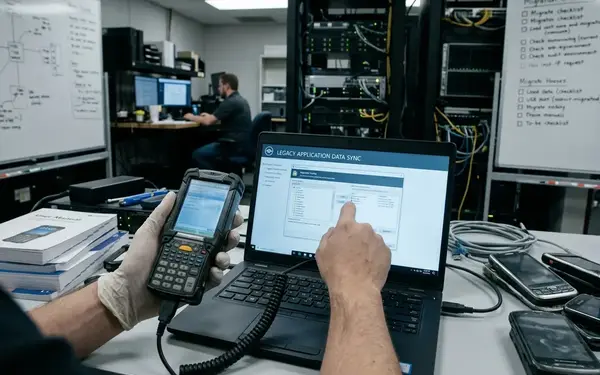
Offline-capable mobile workflows could not assume server-side session continuity, immediate validation, centralized transaction completion, or persistent network availability. A worker might complete forms during a route, store edits locally, and synchronize only after returning to a depot, office wireless zone, or wired cradle.
That design pushes complexity into local state and reconciliation. Duplicate record creation after reconnect, stale local edits, partial upload, authentication timeout, and user confusion over whether a completed task has reached the backend all become architecture concerns. These are not edge curiosities; they are the practical shape of occasionally connected enterprise software.
Limitations of the Available Record
The archive summary cannot claim completeness where primary records, dated releases, customer deployment records, engineering documents, or dated product materials are absent. This reconstruction is useful as technical interpretation of available archive material, not as a definitive corporate history.
It also cannot support broad market impact claims from a small archive trail. Comparisons with other mobile platforms should remain qualitative unless a named source supports a direct comparison.
Note: The safest reading keeps the record narrow: no invented adoption numbers, benchmark results, customer counts, study totals, or market-share claims.
Implications for Architects, Developers, and Technical Historians
For Software Architects
The Adesso Systems archive points back to problems that still recur under different platform names: offline-first design, synchronization conflict handling, deployment packaging, and supportability. Device platforms change faster than enterprise failure modes.
An architect reviewing this material should map each product claim to the operational constraint it attempted to solve. That exercise separates durable architecture lessons from period-specific tooling language.
For.NET Developers
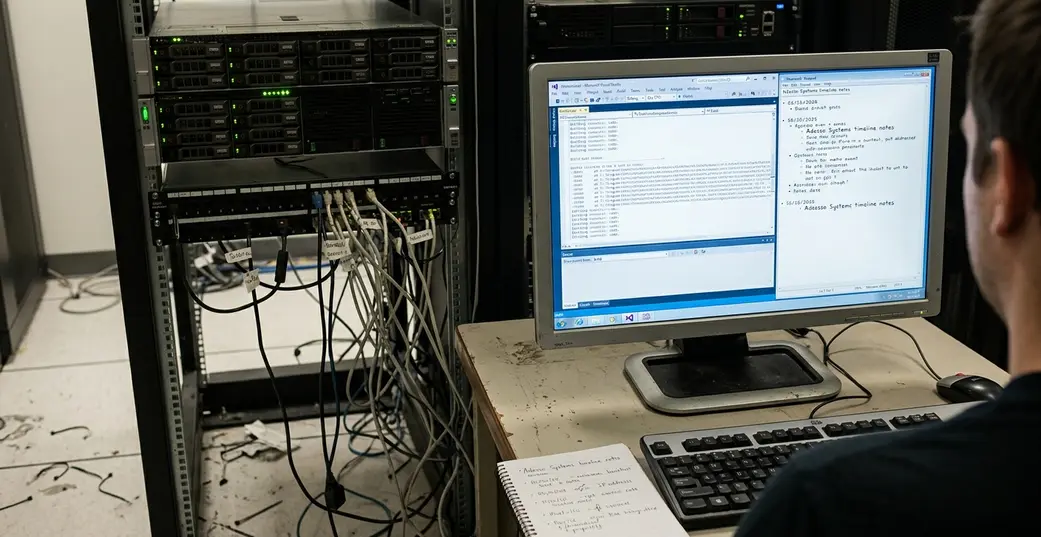
.NET developers can read the timeline as a reminder that runtime assumptions shape application architecture. Managed-code tooling, local persistence, compact runtime limits, and backend integration patterns were not background details. They influenced what a mobile enterprise platform could reasonably promise.
For Technical Historians
Technical historians gain the most when vendor timelines are placed against architectural pressures. Intermittent connectivity, constrained clients, synchronization governance, and enterprise deployment rules give the archive its interpretive frame.
Summary: Adesso Systems matters less as an isolated name than as evidence of how enterprise mobility problems were packaged for builders and buyers. Map product claims to the operational constraints they attempted to solve before drawing larger conclusions.
Quick Tip: When a source gives only an undated archive reference, assign it to a phase and state the technical pressure point. Do not convert it into a calendar milestone.
Closing Synthesis: Reading the Timeline the Right Way
The most reliable reading of Adesso Systems combines three layers: chronology, architecture, and ecosystem context. Chronology orders the archive. Architecture explains why the claims mattered. Ecosystem context places the work inside the.NET mobile development period and its constraints.
Use that method now: compare this reconstruction against verified documents, platform documentation, dated release materials, and contemporaneous enterprise mobility writing, then revise the phase map only where the record supports the change.






Join the Conversation
Share your thoughts.
Your Comment