
Reach the Enterprise Mobility Archive Editors Today
Send us the question you actually need answered. The Adesso Systems archive exists for people working through enterprise mobility history, deployment decisions, platform comparisons, and source material that still matters when older systems remain in the field.
Most useful notes arrive with a narrow question: a product date, a field deployment detail, a Windows Mobile integration path, a RAD tooling comparison, or a request to confirm how a document should be described. We can usually route that kind of inquiry faster than a broad “tell me about mobility” message.
This page explains where to send business, research, media, partnership, and technical contribution requests. It also sets out what to include so the editorial team can answer without guessing at context.
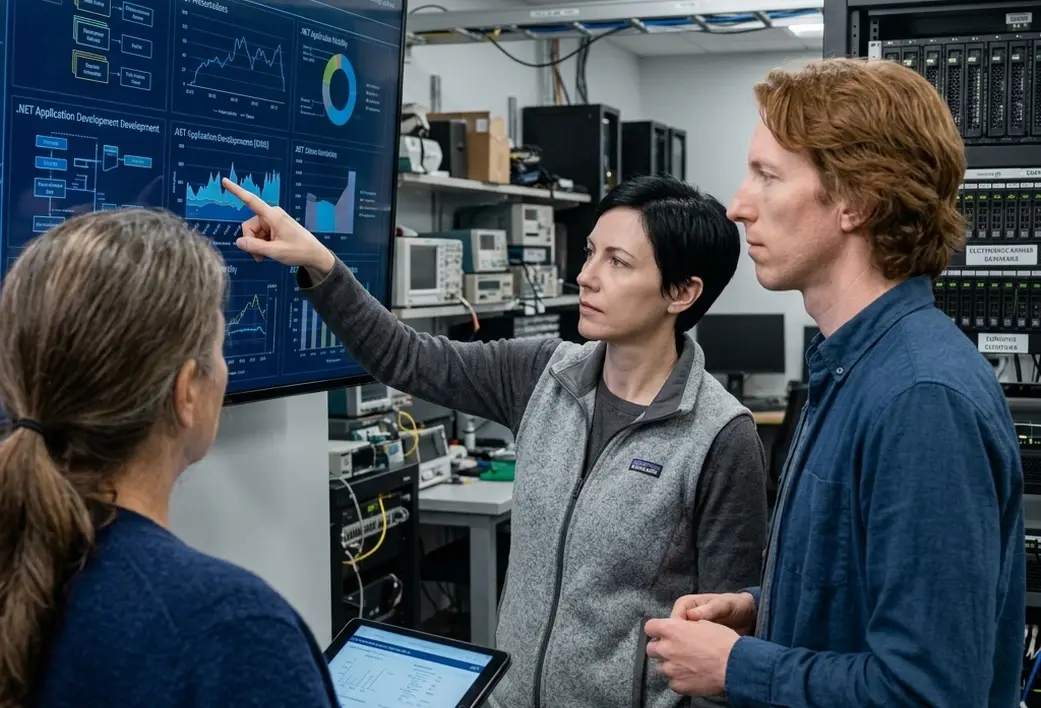
Ask the Right Team About Mobility Archive Research
The archive covers a specific lane: enterprise mobility systems, rapid application development, occasionally connected applications,.NET mobile architecture, the Windows Mobile ecosystem, and industry deployment briefs. If your question touches those areas, send it in.
We prefer concrete questions over general introductions. A short message that names the platform, product family, deployment period, or document title gives us something to inspect. One example from the field: “Was this handheld workflow designed for disconnected warehouse use, or did it assume a live network session?” That question gives us a technical boundary, a likely category, and a way to check related material.
Routing note
For the fastest editorial read, put the topic in the subject line: “Windows Mobile archive question,” “RAD source material,” “Press request,” or “Partnership proposal.”
Primary Contact for Business, Research, and Editorial Questions
General contact
Send business inquiries, research questions, editorial corrections, and archive access questions to Rebecca Halvorsen, Director.
Best subjects to include
- Archive question: product, platform, or deployment period
- Editorial correction: page title and proposed correction
- Business inquiry: organization name and requested next step
- Research request: source material, timeframe, and intended use
When a request belongs with a reviewer, Rebecca routes it to the person closest to the topic. For archive pages, that usually means someone who has been working through the same category, not a generic inbox monitor.
Press and Media Requests About the Archive
Press questions work best when they separate the claim from the background. If you need a quote, say what statement you want checked. If you need context, identify the article, episode, or research angle where the archive will appear.
For example, a reporter covering rugged handheld deployments in logistics should not send only “Can you comment on mobile computing?” A useful note would name the deployment era, the device class, and the angle: offline workflows, synchronization, application delivery, or Windows Mobile support practices.
Include these details for media inquiries
- Your name, publication, and role on the piece
- The specific archive topic or page you are referencing
- The claim, quote, or technical point you want reviewed
- Your deadline and whether the request is for background or attribution
Send press and media requests to [email protected]. Put “Press request” in the subject line so it does not sit among general research mail.
Partnerships, Source Material, and Technical Contributions
Some inquiries are not questions. They are offers: a deployment note, a preserved document set, a technical diagram, a timeline correction, or a proposal to collaborate on a focused archive page.
We sort those messages by source type first. That keeps the review practical. A scanned brochure needs different handling than a developer note about synchronization behavior in an occasionally connected application.
Source material
Name the document, approximate date, original publisher, and how you obtained it. If rights or reuse limits are known, state them plainly.
Technical notes
Describe the system, platform version, integration pattern, and what the note clarifies. One narrow implementation detail often helps more than a broad overview.
Partnership ideas
Explain the scope, duration, and expected output. A focused archive collaboration is easier to evaluate than an open-ended proposal.
We may ask follow-up questions before publishing or citing contributed material. For technical archive work, provenance matters as much as the content itself.
What to Include So We Can Answer Precisely
A good contact note reads like a field ticket with context, not like a marketing brief. It tells us what you saw, what you need, and where the uncertainty sits.
Use this checklist
- Topic: the category, product name, platform, or page title
- Timeframe: year, release period, deployment era, or “unknown” if you do not know
- Material: document title, screenshot, citation, or passage you are asking about
- Question: one or two direct questions rather than a broad research brief
- Use: correction, citation, interview, partnership review, or private research
If you are correcting an archive page, quote the exact sentence and provide the replacement text you believe is more accurate. If you are asking about a technical pattern, name the runtime, network assumption, database layer, or device family when you can.
Who Reviews Contact Requests
Contact requests start with Rebecca Halvorsen and move to the appropriate editorial reviewer when the topic requires a closer technical or historical read. Current reviewer information appears on the Editorial Team page, and background on the archive appears on About Adesso Systems.
The review path depends on the request. A media deadline stays with the primary contact until the question is clear. A source contribution may need a provenance check. A technical correction may go to someone comparing terminology across multiple archive categories.
That triage is deliberately simple. We would rather ask one careful follow-up than answer quickly with the wrong assumption about a deployment model or product lineage.
How Contact Details Are Handled
Use email for contact requests. Do not send sensitive credentials, private customer records, or confidential code unless a separate review process has been agreed in writing.
Contact details are handled in line with the site’s Privacy Policy and Terms of Use. In practice, that means we use your message to answer the inquiry, review the archive issue, or assess the contribution you describe.
Worked example: asking about a Windows Mobile deployment note
- Open a new email to [email protected].
- Use the subject line: “Windows Mobile archive question: warehouse offline workflow.”
- Start with one sentence: “I am checking whether a 2008 warehouse handheld deployment depended on offline synchronization or continuous network access.”
- Add the source: page title, document name, screenshot label, or quotation you are reviewing.
- Ask the specific question: “Does the archive have material that distinguishes the synchronization layer from the device management layer for this deployment type?”
- Close with your intended use: “This is for a technical history note, and I need background context rather than a quoted statement.”